
Events
Highland Games 101
Cabers, kilts, bagpipes and clan tents: a first-timer’s guide to the best day out in the Scottish calendar.
Scottish Highland games and Celtic festivals take place almost every weekend somewhere in North America. They celebrate the athletics, music, dance and family heritage of Scotland, and they’re where you’ll find the clan tents, including ours.
The clan events
Clan tents
Each clan society hosts a tent where visitors can learn about their family, tartan and history. It’s home base for members: shade, snacks and stories.
Parade of Tartans
Representatives of each clan march behind their banner, often calling out their war cry as they pass the grandstand. Ours is “Life or Death!”
Kirkin’ o’ the Tartan
A service of blessing for the tartans of every clan present. The first recorded Kirkin’ in America took place in Washington, D.C., in 1941.
Friendly rivalries
Expect good-humoured “sheep stealing,” mock feuds and teasing between old rival clans, all settled over a dram afterwards.
The heavy events
The “heavies” are the heart of the games: athletes in kilts throwing logs, stones, hammers and iron weights, the way Highland men tested their strength for centuries.
The signature event
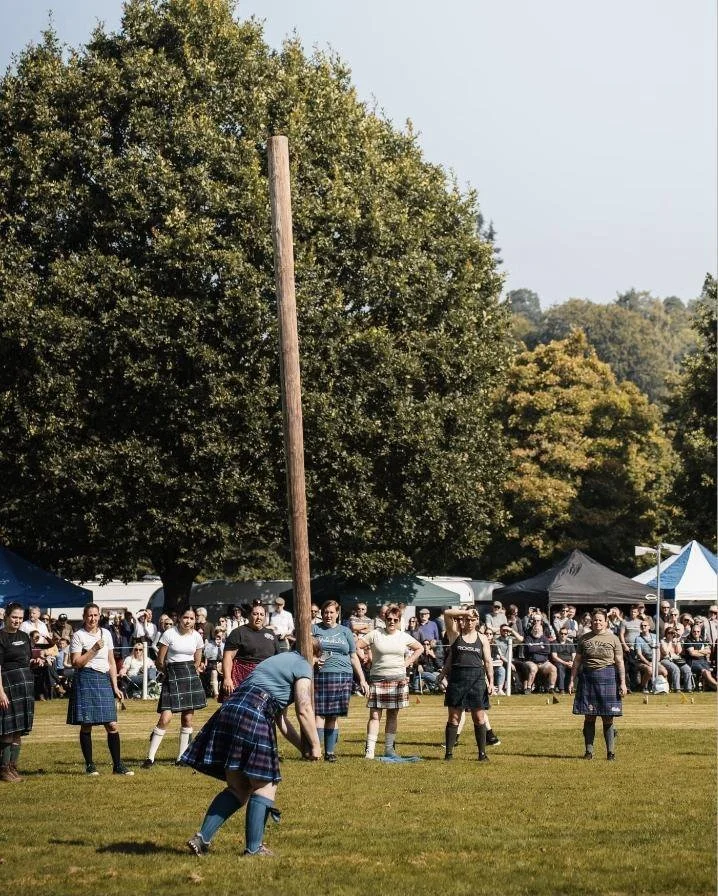
Caber toss
A tapered log, usually 16 to 20 feet long and roughly 90 to 120 pounds, is balanced upright, carried at a run, and heaved so it flips end over end. It’s judged on accuracy, not distance: a perfect toss lands straight ahead, at “12 o’clock.”
Up and over
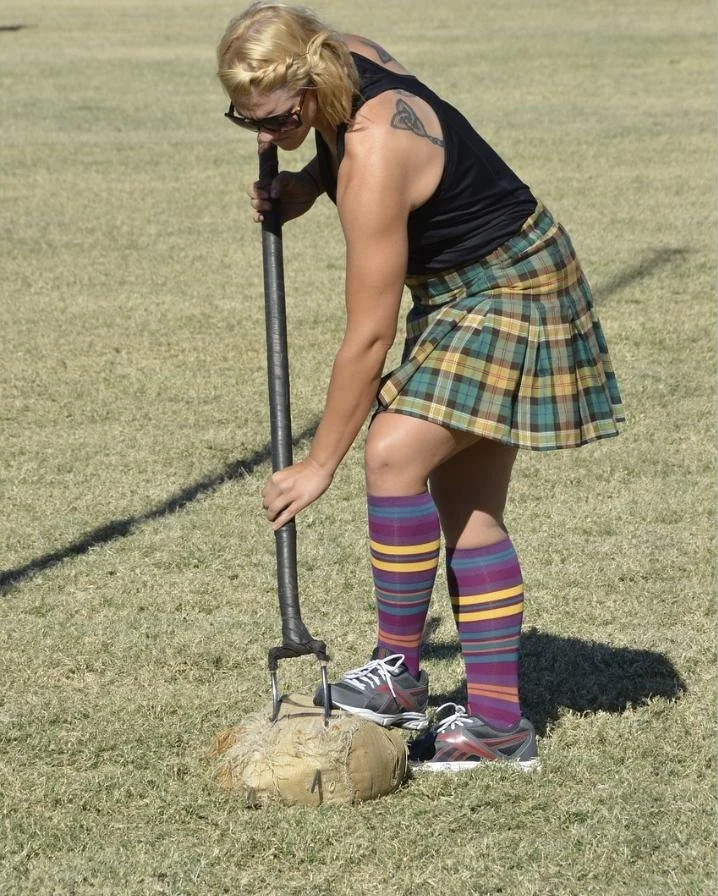
Sheaf toss
A burlap bag stuffed with straw (16 to 20 pounds for men, 10 to 12 for women) is speared with a pitchfork and flung straight up over a raised bar. The bar goes up until only one athlete clears it.
For height
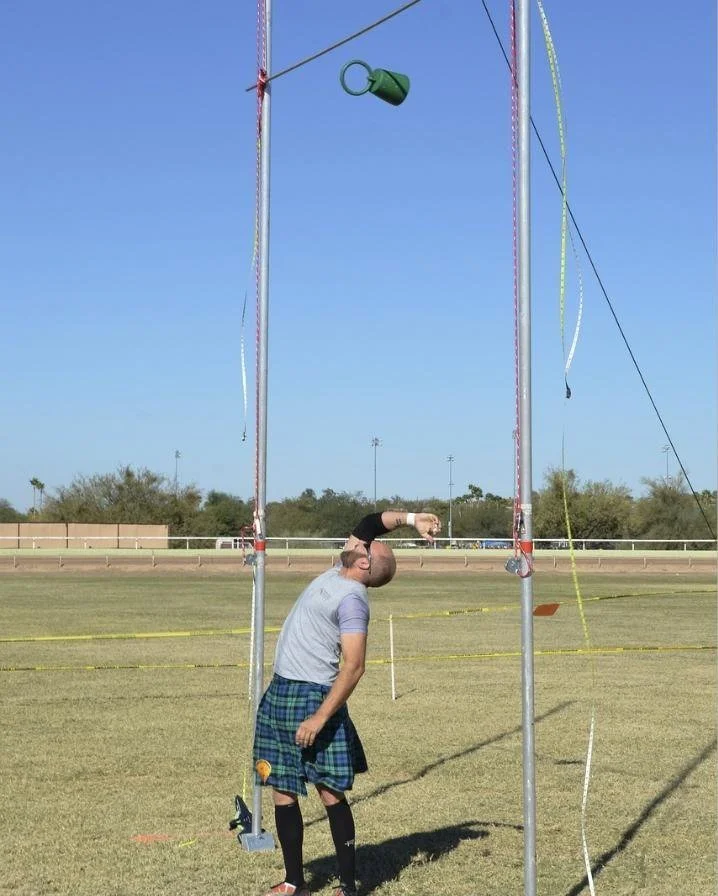
Weight over the bar
Standing beneath the bar, the athlete swings a 56-pound weight (28 for women) between the legs and launches it one-handed over a bar that can be higher than 15 feet. Duck!
For distance
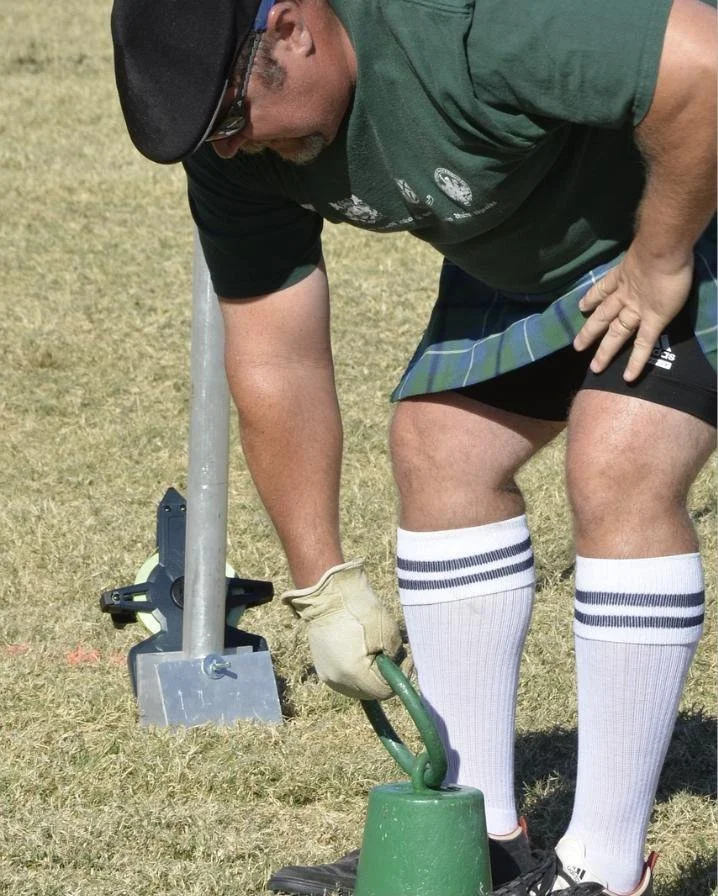
Weight for distance
A block of iron on a short chain and ring handle (28 or 56 pounds for men; 14 or 28 for women) is spun with one hand and released for distance from behind a trig.
Feet planted
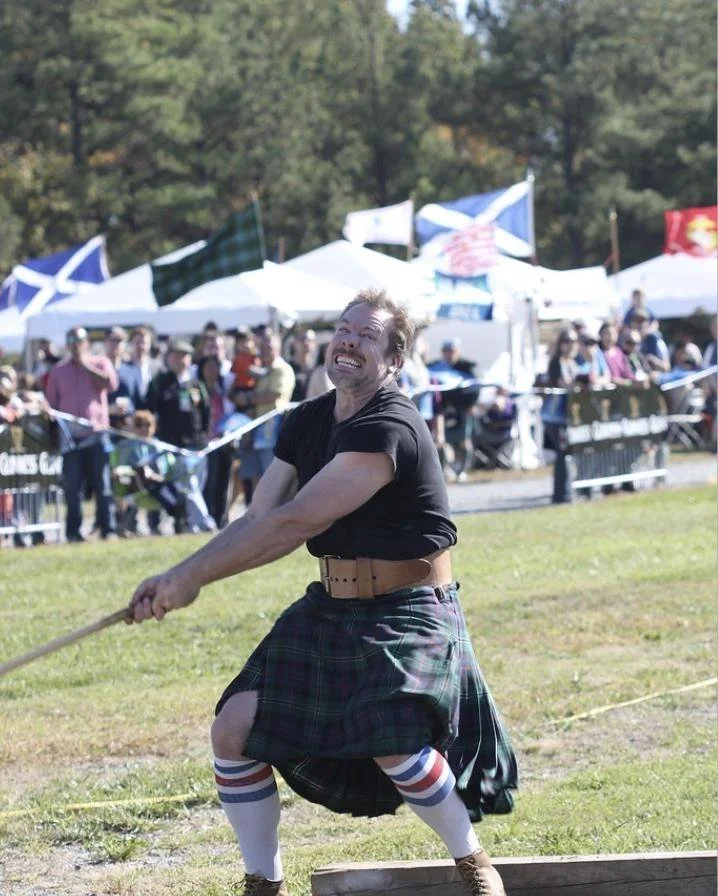
Scottish hammer
A metal ball on a long cane handle (16 or 22 pounds for men; 12 or 16 for women) is whirled around the head and released over the shoulder. Unlike the Olympic hammer, the athlete’s feet stay planted, often with blades on the boots to grip the turf.
The oldest test
Stone put and Braemar stone
A rounded stone (roughly 16 to 32 pounds for men, 8 to 12 for women) is put like a shot. In the Braemar stone, named for the Braemar Gathering in Aberdeenshire, the athlete must throw from a standstill, with no run-up or spin.
Clan against clan
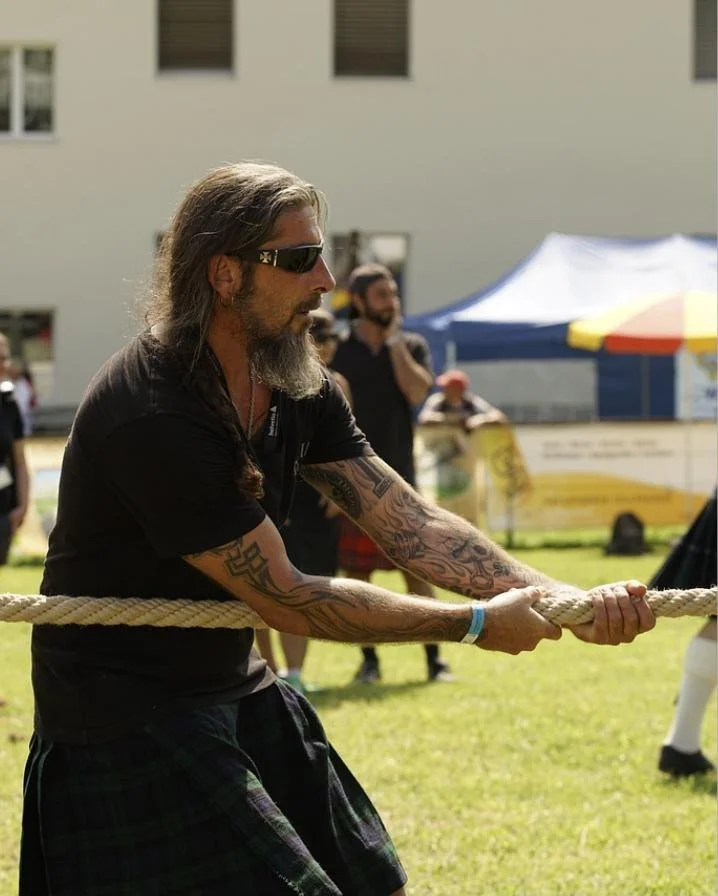
Tug-of-war
Many games end the day with kilted tug-of-war teams, and some let the clans pull against each other. It’s the one heavy event anyone can try. Ask at the MacLachlan tent if we’re fielding a team.
Music and dance
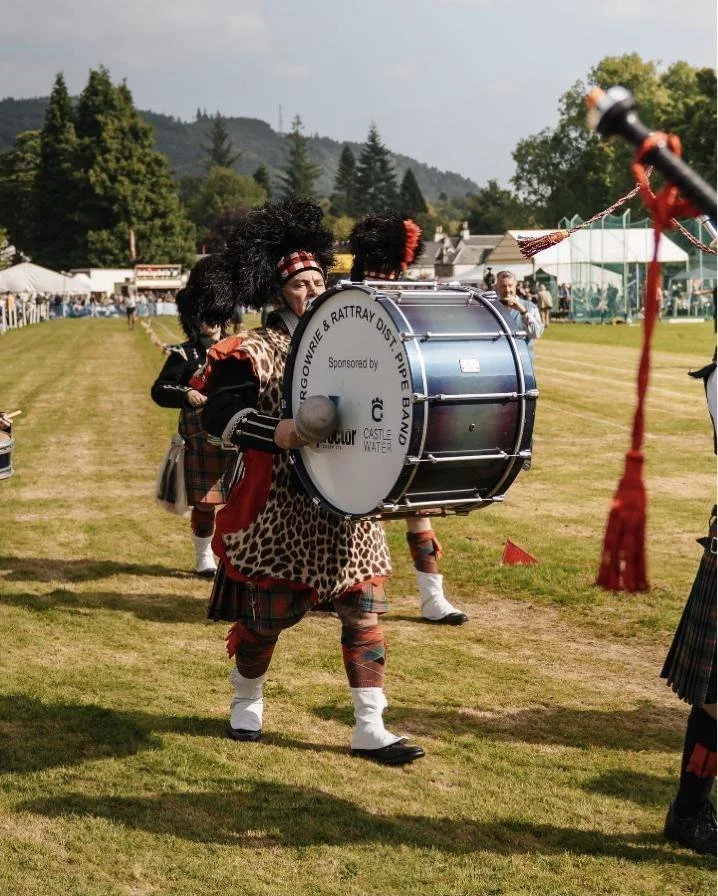
Pipes and drums
Solo pipers and massed bands compete throughout the day. The massed bands at the closing ceremony are unforgettable.
Highland dancing
Dancers compete in the Highland Fling, the Sword Dance and more, judged on timing, technique and grace.
Piobaireachd
The “great music” of the pipes, slow and intricate. Our own clan tune, Moladh Màiri, is a piobaireachd.
Your first games: a checklist
Find the MacLachlan tent first. Check our Find Our Tent page.
Wear something MacLachlan if you have it: a tartan scarf, tie, sash or kilt. Not required!
Bring sunscreen, a hat, a folding chair, and cash for food and vendors.
Arrive early for the opening ceremonies and stay for the massed bands.
March with us in the Parade of Tartans. Ask at the tent for the meeting time.
Photos: caber toss and pipe band by Clément Proust (Pexels); sheaf toss, weight over the bar and weight for distance by TCFA (Pixabay); Scottish hammer by modman (Pixabay); tug-of-war by swissfotoshooting (Pixabay).